TABLE OF CONTENTS

Seeking the best midi keyboard for 2024 to enhance your music production? Whether you’re a novice or an experienced musician, a high-quality midi keyboard is crucial. It streamlines your workflow and boosts your creativity. With numerous options available, finding the right one can be daunting.
This guide will cover the top midi keyboard choices, from portable and affordable to professional-grade models. We’ll discuss essential features to consider. These include the number of keys, key action and sensitivity, assignable controls, and compatibility with popular DAWs like Ableton Live, FL Studio, and Logic Pro X.
Our top picks for 2024 include the Novation SL MK III 49 Key (4.5/5 stars), the versatile Akai MPK 225 (4.0/5 stars), and the powerful Native Instruments Komplete Kontrol 2 49 Key (4.0/5 stars). We’ll also highlight the best options for specific needs, such as the Akai MPK Mini MK3 for portability ($99) and the Arturia KeyLab Essential Mk3 for affordability ($199 for 49 keys).
By the end of this article, you’ll know what to look for in a midi keyboard and which models are worth investing in. Prepare to elevate your music production with our top midi keyboard picks for 2024!
Introduction to MIDI Keyboards
MIDI keyboards have become crucial for musicians, producers, and composers in today’s digital world. These devices enable users to control virtual instruments, digital audio workstations (DAWs), and music software. This opens up a vast array of creative possibilities. We will delve into what MIDI keyboards are and their benefits for musicians at all levels.
What is a MIDI Keyboard?
A MIDI keyboard is a controller that sends MIDI data to a computer or other MIDI-enabled devices. Unlike traditional keyboards, MIDI keyboards do not produce sound themselves. They transmit information about the notes played, velocity, and other parameters. This data controls software instruments, synthesizers, or DAWs. MIDI keyboards vary in size, from compact 25-key models like the Akai MPK Mini MK3 to full-sized 88-key controllers such as the Native Instruments Komplete Kontrol S88 MK2.
Benefits of Using a MIDI Keyboard
One key benefit of MIDI keyboards is the enhanced workflow they provide. They allow for quick input of notes, chords, and melodies into your DAW or virtual instruments. This makes composition more efficient and intuitive. MIDI keyboards also offer a hands-on approach to music production, enabling real-time playing and recording. This can boost creativity and expressiveness.
Another advantage is the ability to control multiple parameters of your virtual instruments or DAW. For instance, the Arturia Keylab 61 mkII has 4 CV outputs and 5 expression control inputs. This extensive control allows for more dynamic and expressive performances. It also streamlines your production process.
MIDI keyboards are versatile in controlling various instruments. Beyond traditional keyboard instruments, there are MIDI controllers for drums, wind instruments, and even guitars. This versatility lets musicians incorporate a wide range of sounds and textures into their productions. It doesn’t matter what your primary instrument is.
Key Features to Consider When Choosing a MIDI Keyboard
When selecting a MIDI keyboard, it’s vital to evaluate several key features. These include the number of keys, the type of key action, and sensitivity. Also, consider the assignable controls and compatibility with your setup. Each feature significantly influences your workflow and overall experience.
Number of Keys
MIDI keyboards vary in size, with popular options being 25, 49, 61, and 88 keys. Compact models, like the Akai MPK Mini MK3, are great for portability and basic use. Larger keyboards, such as the Arturia Keylab 61 mkII, provide more octaves and creative freedom. Your playing style, available space, and composition complexity should guide your choice.
Key Action and Sensitivity
The key action and sensitivity of a MIDI keyboard greatly impact its playability and expressiveness. High-end models, like the Komplete Kontrol S88 MK2, offer weighted keys that mimic an acoustic piano. This provides a realistic touch. Semi-weighted and synth-action keys, found in controllers like the Novation Launchkey 49 MK3, offer a lighter touch and quicker response. Some keyboards also feature aftertouch and velocity curves, enhancing control over dynamics and expression.
Assignable Controls and Pads
Many MIDI keyboards include assignable controls and pads, enhancing workflow and creativity. Look for models with knobs, faders, and buttons that can control various parameters in your DAW or virtual instruments. Pads, such as those on the Akai MPK Mini MK3, are great for triggering samples and drum patterns. Features like touch strips, arpeggiators, and chord modes further expand your MIDI keyboard’s functionality.
Compatibility and Connectivity
It’s essential to ensure your MIDI keyboard is compatible with your computer, DAW, and other gear for a seamless experience. Most MIDI controllers connect via USB, offering a simple and reliable connection. Some models, like the Arturia Keylab 61 mkII, also have 5-pin MIDI DIN ports for connecting to hardware synthesizers. CV and Gate outputs, found on select keyboards, allow integration with modular and analog synths. Remember to check for a sustain pedal input if you plan to use one for expressive performances.
Best MIDI Keyboard for Beginners
Embarking on your music production journey requires the right tools. A beginner MIDI keyboard should be intuitive, integrate smoothly with DAWs, and offer features for learning and growth. We’ll delve into two top picks for beginners: the Novation Launchkey MK3 and the Akai MPK Mini MK3.
Seeking the best midi keyboard for 2024 to enhance your music production? Whether you’re a novice or an experienced musician, a high-quality midi keyboard is crucial. It streamlines your workflow and boosts your creativity. With numerous options available, finding the right one can be daunting.
This guide will cover the top midi keyboard choices, from portable and affordable to professional-grade models. We’ll discuss essential features to consider. These include the number of keys, key action and sensitivity, assignable controls, and compatibility with popular DAWs like Ableton Live, FL Studio, and Logic Pro X.
Our top picks for 2024 include the Novation SL MK III 49 Key (4.5/5 stars), the versatile Akai MPK 225 (4.0/5 stars), and the powerful Native Instruments Komplete Kontrol 2 49 Key (4.0/5 stars). We’ll also highlight the best options for specific needs, such as the Akai MPK Mini MK3 for portability ($99) and the Arturia KeyLab Essential Mk3 for affordability ($199 for 49 keys).
By the end of this article, you’ll know what to look for in a midi keyboard and which models are worth investing in. Prepare to elevate your music production with our top midi keyboard picks for 2024!
Introduction to MIDI Keyboards
MIDI keyboards have become crucial for musicians, producers, and composers in today’s digital world. These devices enable users to control virtual instruments, digital audio workstations (DAWs), and music software. This opens up a vast array of creative possibilities. We will delve into what MIDI keyboards are and their benefits for musicians at all levels.
What is a MIDI Keyboard?
A MIDI keyboard is a controller that sends MIDI data to a computer or other MIDI-enabled devices. Unlike traditional keyboards, MIDI keyboards do not produce sound themselves. They transmit information about the notes played, velocity, and other parameters. This data controls software instruments, synthesizers, or DAWs. MIDI keyboards vary in size, from compact 25-key models like the Akai MPK Mini MK3 to full-sized 88-key controllers such as the Native Instruments Komplete Kontrol S88 MK2.
Benefits of Using a MIDI Keyboard
One key benefit of MIDI keyboards is the enhanced workflow they provide. They allow for quick input of notes, chords, and melodies into your DAW or virtual instruments. This makes composition more efficient and intuitive. MIDI keyboards also offer a hands-on approach to music production, enabling real-time playing and recording. This can boost creativity and expressiveness.
Another advantage is the ability to control multiple parameters of your virtual instruments or DAW. For instance, the Arturia Keylab 61 mkII has 4 CV outputs and 5 expression control inputs. This extensive control allows for more dynamic and expressive performances. It also streamlines your production process.
MIDI keyboards are versatile in controlling various instruments. Beyond traditional keyboard instruments, there are MIDI controllers for drums, wind instruments, and even guitars. This versatility lets musicians incorporate a wide range of sounds and textures into their productions. It doesn’t matter what your primary instrument is.
Key Features to Consider When Choosing a MIDI Keyboard
When selecting a MIDI keyboard, it’s vital to evaluate several key features. These include the number of keys, the type of key action, and sensitivity. Also, consider the assignable controls and compatibility with your setup. Each feature significantly influences your workflow and overall experience.
Number of Keys
MIDI keyboards vary in size, with popular options being 25, 49, 61, and 88 keys. Compact models, like the Akai MPK Mini MK3, are great for portability and basic use. Larger keyboards, such as the Arturia Keylab 61 mkII, provide more octaves and creative freedom. Your playing style, available space, and composition complexity should guide your choice.
Key Action and Sensitivity
The key action and sensitivity of a MIDI keyboard greatly impact its playability and expressiveness. High-end models, like the Komplete Kontrol S88 MK2, offer weighted keys that mimic an acoustic piano. This provides a realistic touch. Semi-weighted and synth-action keys, found in controllers like the Novation Launchkey 49 MK3, offer a lighter touch and quicker response. Some keyboards also feature aftertouch and velocity curves, enhancing control over dynamics and expression.
Assignable Controls and Pads
Many MIDI keyboards include assignable controls and pads, enhancing workflow and creativity. Look for models with knobs, faders, and buttons that can control various parameters in your DAW or virtual instruments. Pads, such as those on the Akai MPK Mini MK3, are great for triggering samples and drum patterns. Features like touch strips, arpeggiators, and chord modes further expand your MIDI keyboard’s functionality.
Compatibility and Connectivity
It’s essential to ensure your MIDI keyboard is compatible with your computer, DAW, and other gear for a seamless experience. Most MIDI controllers connect via USB, offering a simple and reliable connection. Some models, like the Arturia Keylab 61 mkII, also have 5-pin MIDI DIN ports for connecting to hardware synthesizers. CV and Gate outputs, found on select keyboards, allow integration with modular and analog synths. Remember to check for a sustain pedal input if you plan to use one for expressive performances.
Best MIDI Keyboard for Beginners
Embarking on your music production journey requires the right tools. A beginner MIDI keyboard should be intuitive, integrate smoothly with DAWs, and offer features for learning and growth. We’ll delve into two top picks for beginners: the Novation Launchkey MK3 and the Akai MPK Mini MK3.
Novation Launchkey MK3
The Novation Launchkey MK3 stands out for beginners eager to start music production. It boasts a user-friendly interface and seamless integration with DAWs like Ableton Live. This makes it simple to begin creating music immediately. The keyboard’s velocity-sensitive keys offer a responsive playing experience.
Its compatibility with Ableton Live is a major highlight. The Launchkey MK3 comes with Ableton Live Lite, providing a robust music production suite. Its layout mirrors Ableton’s interface, making it intuitive for beginners.
Akai MPK Mini MK3
The Akai MPK Mini MK3 is another excellent choice for beginners. Despite its compact size, it offers a wealth of features for starting your music production journey. It features 25 velocity-sensitive keys for expressive playing.
The MPK Mini MK3 also includes eight assignable knobs and eight MPC-style pads. These provide hands-on control over virtual instruments and effects. The pads are velocity-sensitive, ideal for drumming, triggering samples, or playing melodies. The built-in arpeggiator enables the creation of intricate patterns with ease.
Its portability is a significant advantage. The MPK Mini MK3’s compact design makes it easy to carry, perfect for on-the-go music production. It’s USB-powered, eliminating the need for an extra power supply.
Both the Novation Launchkey MK3 and the Akai MPK Mini MK3 are ideal for beginners. They offer user-friendly interfaces, extensive features, and compatibility with popular DAWs. These MIDI keyboards provide a solid foundation for learning and growing as a musician.
Best Budget MIDI Keyboard
In the quest for the best budget MIDI keyboard, several options stand out for their value and features. These affordable choices fall within the $100 to $200 range. They cater to both beginners and seasoned musicians, offering a balance of cost and functionality.
The Akai MPK Mini Mk3 is a top pick, priced under $100. It boasts 25 mini keys, 8 MPC-style pads, and 8 encoders. This makes it ideal for producers who need a portable yet versatile controller. Another great option is the Nektar Impact LX49+, priced just under $200. It features 49 full-sized keys, 8 pads, 8 encoders, and 8 faders. This provides a comprehensive control set for any studio setup.
For media composers, the Arturia MiniLab 3 is a standout choice. It offers 25 mini keys, 8 pads, 8 encoders, and 4 faders in a compact design. If you’re into beat-making and finger drumming, the Akai MPC Studio is perfect. It features 16 MPC pads and supports aftertouch.
Other notable options include the Novation LaunchKey Mini MK3, Native Instruments Komplete Kontrol M32, and Arturia Microlab. These controllers offer a variety of features and seamless integration with popular DAWs. When selecting a budget MIDI keyboard, consider key count, assignable controls, portability, and software compatibility.
With numerous high-quality, affordable MIDI keyboards available, finding the right one for your budget is easy. Whether you’re starting out or need a reliable backup, these budget-friendly options deliver exceptional performance and value.
Top MIDI Keyboards for Professional Use
In the realm of professional midi keyboards, several models excel. These keyboards cater to the needs of seasoned producers, composers, and performers. They offer advanced features, superior build quality, and seamless integration with popular software and DAWs.
Arturia KeyLab MkII 61
The Arturia KeyLab MkII 61 is a favorite among professionals. It features 61 high-quality keys with aftertouch, ensuring a responsive and expressive playing experience. The keyboard also boasts an array of assignable controls, including knobs, faders, and pads. This allows for extensive customization. It seamlessly integrates with Arturia’s acclaimed software instruments, such as Analog Lab and Piano V, enhancing your creative workflow.
Native Instruments Komplete Kontrol S49 MK2
The Native Instruments Komplete Kontrol S49 MK2 is a top choice in the professional midi keyboard market. This 49-key controller is designed to work seamlessly with the powerful Komplete software suite. It gives you access to a vast library of high-quality virtual instruments and effects. The S49 MK2 features premium, semi-weighted keys with aftertouch, ensuring a tactile and responsive playing experience. Its high-resolution color display and intuitive controls make navigating and controlling your virtual instruments easy.
Novation SL MkIII 49
The Novation SL MkIII 49 is a versatile and feature-packed midi keyboard for professional users. It boasts 49 semi-weighted keys with aftertouch, delivering a satisfying and expressive playing feel. Its extensive set of assignable controls, including eight faders, eight knobs, and 16 velocity-sensitive RGB pads, sets it apart. The SL MkIII 49 also offers deep integration with popular DAWs like Ableton Live, making it ideal for live performances and studio production.
Best Portable MIDI Keyboards
For musicians and producers always on the move, a portable MIDI keyboard is crucial. These keyboards are small, light, and packed with features for music creation anywhere, anytime. When selecting the best portable MIDI keyboard, consider the number of keys, usually between 25 to 32. Also, ensure it’s compatible with your preferred DAW and devices. In 2024, top picks include the Novation MK III Mini, Akai MPK Mini MK3, and Nektar Impact LX Mini 25-key Keyboard Controller.
Akai MPK Mini MK3
The Akai MPK Mini MK3 stands out for portable music production. It boasts a compact design, 25 velocity-sensitive mini keys, 8 backlit MPC-style pads, and 8 assignable knobs. It’s praised for its solid DAW integration, earning a 4.0 rating for its size and functionality. It’s ideal for musicians seeking a reliable, feature-rich portable MIDI keyboard that fits seamlessly into their workflow.
Arturia MiniLab MkII
The Arturia MiniLab MkII is another top portable choice. It features 25 slim keys, 16 rotary encoders, and 8 RGB backlit performance pads in a compact, lightweight form. It also includes a built-in arpeggiator, enhancing creativity in your productions. Its intuitive layout and compatibility with various devices make it a favorite among musicians and producers looking for a versatile, portable MIDI keyboard.
MIDI Keyboards with Weighted Keys
MIDI keyboards with weighted keys are perfect for pianists and musicians seeking authenticity. They feature hammer-action or semi-weighted keys, closely mimicking a traditional piano. These keys offer resistance and feedback, enhancing your technique and musicality.
Two top options stand out: the Studiologic SL88 Studio and the M-Audio Hammer 88 Pro. Both are praised for their exceptional key action, build quality, and versatility. They cater to the needs of modern musicians.
Studiologic SL88 Studio
The Studiologic SL88 Studio is a leading choice for MIDI keyboards with weighted keys. It has 88 keys with Fatar’s TP/100LR keyboard, known for its fully-weighted hammer-action. This keybed provides a balanced resistance and responsiveness, ideal for both classical pianists and composers.
The SL88 Studio also boasts a sleek design and durable construction. It’s perfect for studio and stage use. Customizable controls allow for seamless workflow adjustments.
M-Audio Hammer 88 Pro
The M-Audio Hammer 88 Pro is another top pick for weighted keys. It features a graded hammer-action keybed, mimicking a real piano’s feel. The keys are velocity-sensitive and pressure-sensitive, capturing every detail of your performance.
The Hammer 88 Pro also offers a wide range of features. It has assignable controls and extensive connectivity options. This makes it versatile for pianists, composers, and producers.
Choosing between the Studiologic SL88 Studio and the M-Audio Hammer 88 Pro depends on your needs. Both keyboards deliver a realistic piano feel and offer features to boost creativity and productivity. Whether you prefer the authentic hammer-action of the SL88 Studio or the versatility of the Hammer 88 Pro, these keyboards will enhance your playing experience.
MIDI Keyboards for Specific DAWs
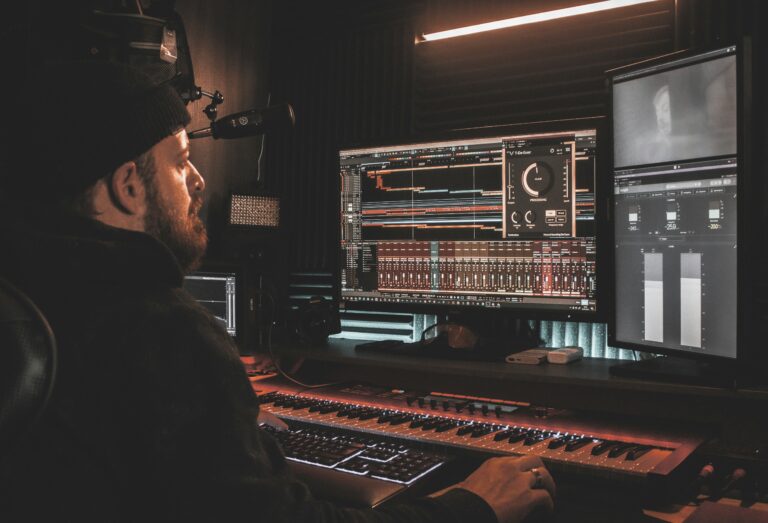
Choosing the right MIDI keyboard for your digital audio workstation (DAW) is crucial. It’s important to look at the integration and compatibility between the keyboard and your software. Some MIDI keyboards are made to work perfectly with certain DAWs. They offer special controls and features that can boost your workflow and creativity.
Best MIDI Keyboard for Ableton Live
The Novation Launchkey MK3 series is a top pick for Ableton Live users. These keyboards integrate deeply with Ableton, giving you controls for launching clips and navigating tracks. They come in 25, 37, 49, and 61-key versions, fitting various needs and setups. The Ableton Push 2 is another great choice, designed for Ableton Live. It offers a full range of controls and an intuitive workflow.
Best MIDI Keyboard for FL Studio
For FL Studio users, the Novation FLkey series is a perfect match. The FLkey Mini and FLkey 37 are made for FL Studio, offering seamless integration and controls for its unique features. These keyboards have a variety of assignable controls, pads, and transport buttons. The Akai Fire is also a notable option, with a comprehensive set of controls and 4×16 RGB pads for creating tracks and patterns.
Best MIDI Keyboard for Logic Pro X
The Native Instruments Komplete Kontrol series is a top choice for Logic Pro X users. These keyboards integrate tightly with Logic Pro X, providing transport controls and easy access to features. They also have high-quality keybeds and assignable controls, making them great for studio and live performances. The Nektar Panorama T4 is another excellent option, offering deep integration with Logic Pro X and controls for mixing and plugin parameters.
When picking a MIDI keyboard for your DAW, consider integration, controls, and compatibility. A MIDI keyboard designed for your DAW can open up new creative possibilities and streamline your music production.
Accessories and Add-Ons for MIDI Keyboards
To maximize your MIDI keyboard’s capabilities, consider essential accessories like sustain pedals, expression pedals, and stands. Sustain pedals, such as the BOSS FS-5U, are vital for piano-style playing. They allow you to sustain notes without your fingers on the keys. This enhances expressiveness and realism, especially with piano or string sounds.
Expression pedals are also crucial, enabling real-time control over volume, modulation, or other parameters. By using your foot, you can add depth and nuance to your playing. Many MIDI keyboards, like the Arturia KeyLab MkII 61 and Native Instruments Komplete Kontrol S49 MK2, have dedicated inputs for these pedals, making integration seamless.
For long, comfortable playing sessions, ergonomics and stability are key. A sturdy keyboard stand, such as the Jaspers 6D-120B, ensures your MIDI keyboard is at the right height and angle. This reduces strain on your wrists, shoulders, and back, allowing you to focus on your performance.
Even without a sustain pedal input, like on the microKORG, solutions exist. The Jahn Pedal Footstool aids children or those with mobility issues. For seated and standing players, a well-designed stand offers stability and comfort.
Choosing the right midi keyboard accessories can create a personalized setup that boosts creativity and enhances your musical experience. Whether it’s essential add-ons like sustain pedals and stands or advanced options like expression pedals and wireless MIDI adapters, these accessories elevate your performances.
Conclusion

Choosing the best midi keyboard in 2024 demands a thoughtful approach, considering your specific needs and budget. Whether you’re a novice or a seasoned musician, our list caters to all. Key factors include the number of keys, key action, assignable controls, and compatibility with your DAW. These ensure you make the right choice.
The midi keyboard market is vast, from the Akai MPK Mini MK3 for beginners to the Arturia KeyLab MkII 61 for professionals. It’s crucial to think about accessories and add-ons that boost your workflow and creativity. Items like sustain pedals, carrying cases, and stands can make a significant difference.
This comprehensive guide will help you make an informed decision, finding the perfect controller for 2024. The ideal midi keyboard meets your unique needs, empowering you to create music you love. Happy music-making!
 Made with Bullet